
Lost in Space (1998): Almost a Cult Classic
This entry is a little different. Almost a Cult Classic is still finding its voice, and this film presents a particular challenge: there’s so much working against itself that a truly exhaustive breakdown would turn into a catalogue rather than a critique. That’s not the aim here. This isn’t a snark-driven dissection in the style of YouTube critics who specialise in that approach. What follows is a focused look at why this film never quite works — and why that failure feels so persistent while watching it.
There’s a very specific moment when you realise a big-budget science-fiction film is quietly losing you. Not because it’s offensively bad, not because anything has exploded yet, just a creeping sense that the movie is doing a lot of talking and very little convincing. Lost in Space (1998) hits that moment early, then keeps circling it for the next two hours.
On paper, this should work. It has a solid cast, a recognisable brand name and New Line Cinema money behind it. Instead, the film slowly bleeds confidence. Bad decisions pile up while the logic softens and authority evaporates. By the time the final act arrives, you’re not tense — you’re tired. Not because nothing is happening, but because the movie hasn’t earned your concern.
A Note on the Original Series
Lost in Space began life as a 1960s television series created by Irwin Allen, fragments of which I remember catching on free-to-air television as a kid, but never in full or in order. This review treats the 1998 film as a standalone work. Any references to other versions are broad and tonal rather than comparative. The focus here isn’t fidelity, but execution.
The Opening Problem
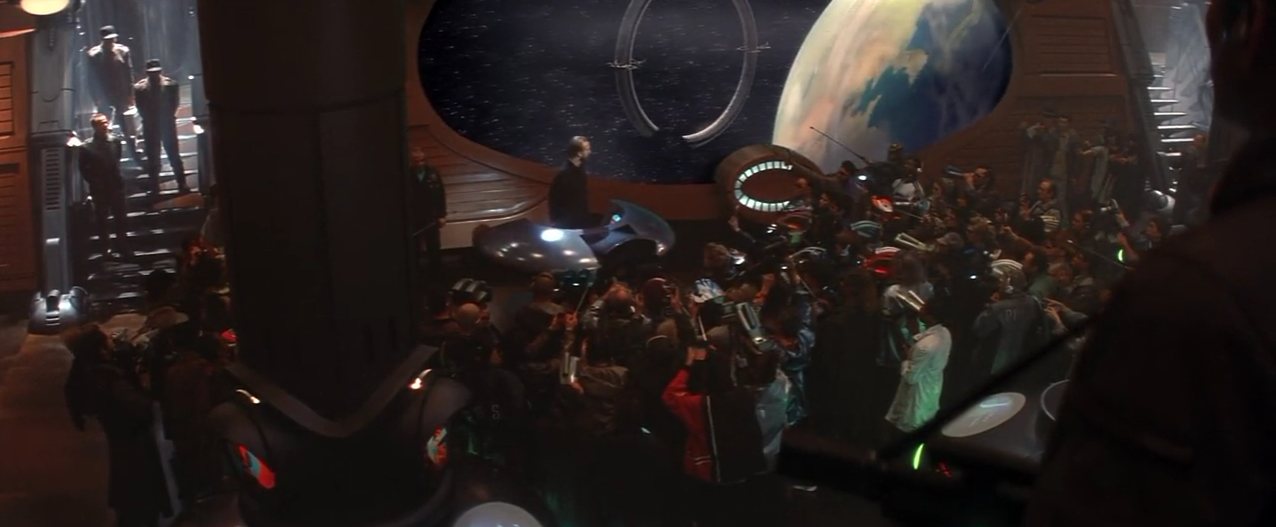
Info dump to the media — like nobody knew already
The film opens by explaining itself thoroughly. Not introducing the world; instead, explaining it. Names, politics, motivations, future history, all laid out early like a briefing you didn’t ask for but are expected to sit through, anyway. Instead of letting the future reveal itself through action, Lost in Space unloads its setup in one dense burst, as if worried the audience might wander off if not constantly supervised.
The issue isn’t the amount of information so much as how it’s delivered — scenes meant to connect the story fly past, creating whiplash instead of momentum.
This becomes the film’s default mode. The movie seems convinced that if it ever stops explaining, something important might escape. Characters don’t react to danger so much as describe it, often while standing still. Scenes pause for clarification instead of escalation, for reassurance instead of urgency. You’re told things are critical, imminent, or life-or-death, but you’re rarely allowed to feel that pressure yourself. It’s less like being dropped into a crisis and more like being talked through one while everyone waits for you to catch up.
Science, Until It Isn’t
Early on, fighter pilots sit in a transparent bubble and fly through space without helmets. It’s not a huge plot point, but it’s an immediate red flag. In a vacuum, one cracked canopy turns the cockpit into a Jackson Pollock painting. The film doesn’t care — space is only dangerous when the story needs it to be.
Later, Penny explains exposure to vacuum in a way that sounds like it was lifted from a schoolyard argument. People don’t explode; liquids boil in a vacuum, and radiation becomes the real threat. Survival depends on where you are and how long you’re exposed. Even by soft sci‑fi standards, the rules here feel optional.
Energy works the same way. Solar panels are described as being “charged,” as if they’re batteries rather than collectors. If the ship has solar panels, the ongoing panic about reactor power starts to feel staged. Add visual flourishes like tiny air brakes on a spacecraft, and it becomes clear the film prefers something that looks right over something that makes sense.
Science note: The reactor type isn’t explained, and I know you can’t charge decaying materials like uranium, but it still leaves questions.
Authority Without Weight
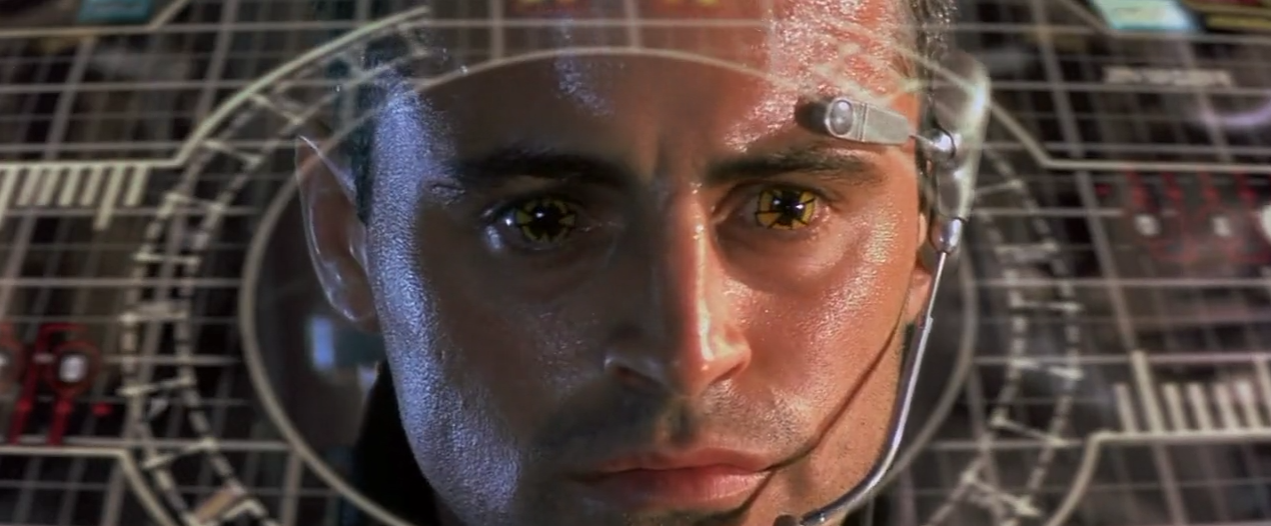
Major West - Take your protein pills and put your helmet on
Major Don West is where the film really starts tripping over itself. On paper, he’s a decorated officer. On screen, he behaves like someone who wandered in from a sitcom set and never quite found the exit. In the middle of touching scenes, he flirts with Judy, offers up his quarters, and fires off pickup lines. Whatever tension the scene was trying to build drains away. West is presented as enhanced with augmented eyes in the opening scenes, but like everything else about his authority never matters. His rank becomes decorative, and once authority collapses at the top, it spreads.
On a supposedly deserted ship, the crew watches doors dent from the inside. They see movement. They acknowledge the danger and stay anyway — waiting for maps to finish downloading to the Jupiter 2. Not monitoring the process or doing anything useful, just standing there, like the download will fail if nobody keeps an eye on it. It’s the narrative equivalent of watching a file copy bar crawl across a screen, convinced that walking away might somehow make it stop. These aren’t brave pauses. They’re the cinematic version of watching paint dry and calling it command presence.
Dialogue Versus Performance
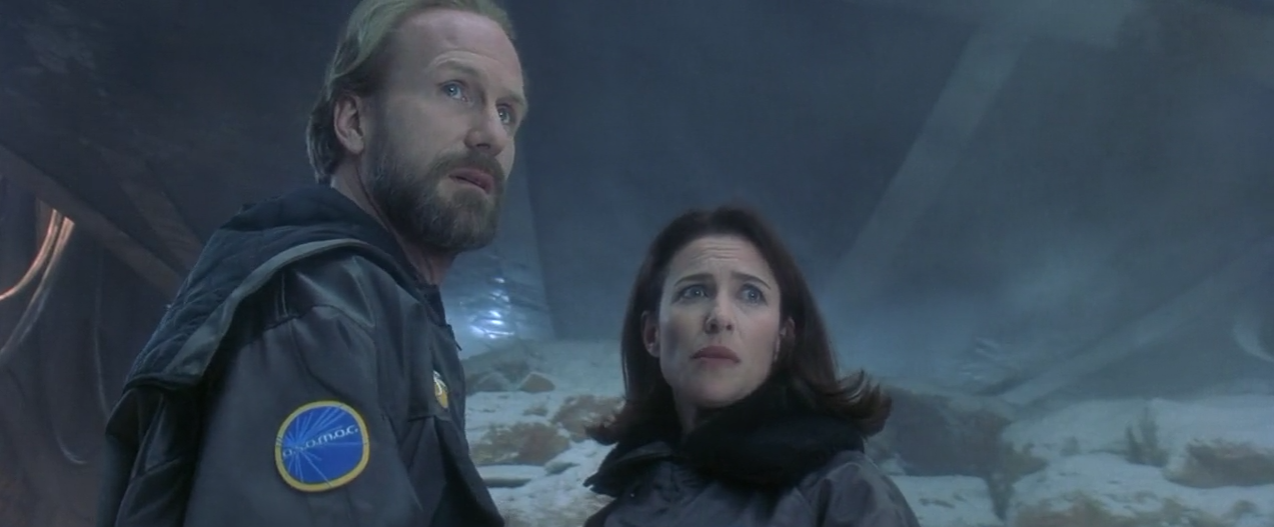
Come home to me, Professor - I love you Wife
The cast is well chosen, which makes the dialogue all the more frustrating. Emotional beats are announced rather than felt. After being revived, Judy launches into medical explanations instead of simply telling her family she’s okay. Intimate moments land with lines like “I love you, wife,” which read more like writing than speech.
Matt LeBlanc never fully escapes his sitcom rhythm, and Gary Oldman plays Dr Smith as a slimier echo of Jean‑Baptiste Emanuel Zorg. Oldman is entertaining, but he belongs in a louder, more self‑aware film than this one pretends to be.
What becomes hard to ignore is how unevenly the film distributes presence. Penny drifts into near–comic relief, her recorded diary framing events rather than shaping them. Maureen is positioned primarily as a stabilising force — the wife, the voice of concern, present but rarely permitted to redirect the story. Judy fares slightly better, cast as a softer, more emotional version of Spock, competent, yet even her most decisive moment of firing the flare that guides the ship home serves to enable the men’s return rather than alter the course of events herself. It’s not that the women are written as incapable; it’s that the film keeps finding reasons for them to support the story instead of driving it.
Dr Smith and Convenient Failure
Dr Smith works because Gary Oldman commits, but the character is shaped almost entirely by convenience. His technology fails when the plot needs it to. He’s captured without being properly searched. His theatrical declarations feel staged rather than inevitable. Smith doesn’t navigate consequences — he’s repositioned from scene to scene.
Dr Smith charging in at the last moment to declare "We’re doomed" doesn’t feel earned so much as required — a reminder that the film wants the idea of classic Dr Smith without doing the work to justify him.
The Robot and Unwritten Rules
The Robot is iconic, and its bond with Will is meant to anchor the film emotionally. The problem is that the rules governing that bond are never established. Sure, Will is great with software and hardware, but even during Robot’s programmed rampage, Will gains control of the Robot because the story requires it, not because we’re shown how that control works. The imagery lands; the logic doesn’t.
Action That Undercuts Itself
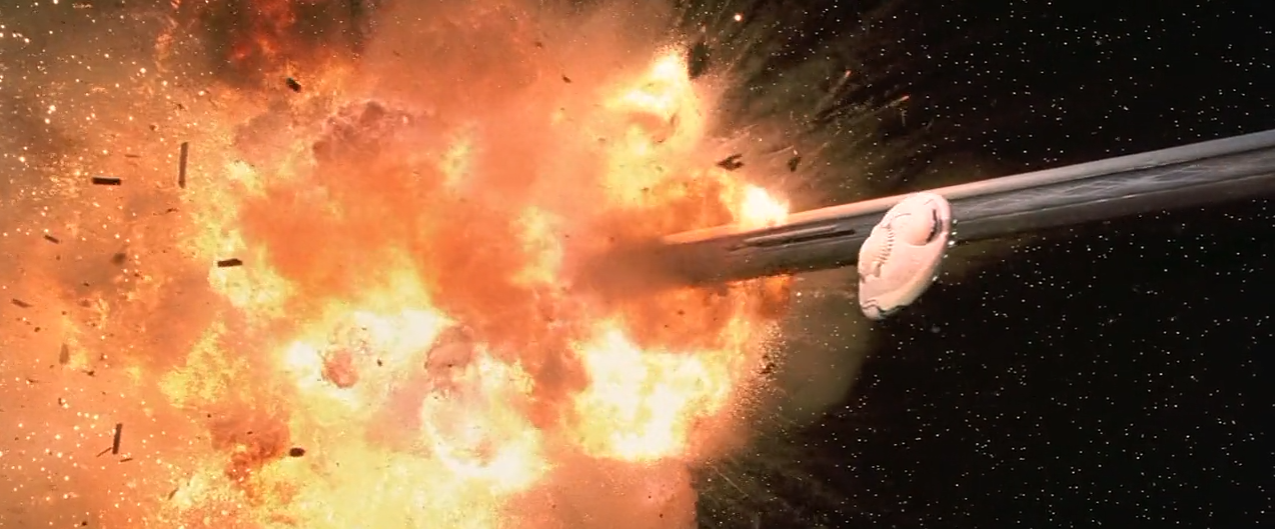
Even consoles shake. At least they don’t explode like other IPs
When action finally arrives, it often works against the film instead of for it. West flies alongside an exploding ship like a cartoon character running with a falling tree instead of stepping clear of it. They remain docked while the danger escalates. Maureen announces preparations to disengage when the ship should already be moving.
These choices don’t heighten tension — they raise questions. Not big philosophical ones, just practical ones. Questions like: why is anyone still alive? Even the visuals lean into this problem. Near the sun, the bridge shutters stay open so the audience can see what’s happening. Nostalgic touches, like using the Jupiter 1 skin to reveal the Jupiter 2, are cute in isolation, but clash badly with the film’s insistence that this is all very serious business.
This is where it starts to wear you down, and…
Fatigue Sets In
By around the ninety‑minute mark, the film begins to wear itself out. Not because nothing is happening, but because everything is happening the same way. Crisis follows crisis without variation. The movie mistakes motion for momentum, and the loose science leaves the audience tired rather than invested.
I love a good time travel story. Some are better at it than others, but some use…
Time Travel Without Care
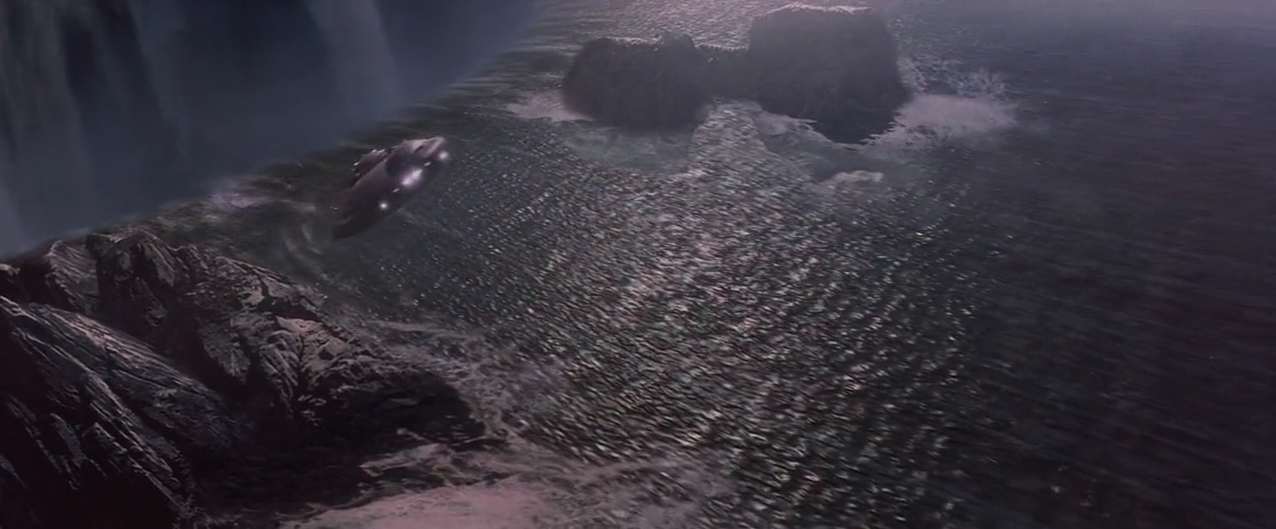
Physics is the fine print the film hopes no one reads
Late in the story, time travel enters the narrative and immediately begins to strain. On the surface, the film gestures toward a closed causal loop: the existence of the time machine implies that Will must leave Earth and survive long enough to build it. A collapsing planet shortens the window in which young Will could ever reach that future, meaning going back to change events wouldn’t fix anything; it would simply erase the very future that makes the journey possible.
The problem is that the film places these ideas side by side without reconciling them. By combining a collapsing timeline with an attempt to undo it, the story cancels out both a single, self-consistent loop and a branched timeline model, creating a paradox entirely of its own making. What should be a deliberate exploration of consequence instead feels like time travel being used as a dramatic shortcut, landing briefly on sound theory before abandoning it the moment it becomes inconvenient.
It’s time travel that starts with rules and quietly walks away from them.
The final act abandons physics entirely. The ship can’t gain altitude — until it suddenly can by flying through a collapsing planet. Gravity pulls, repels, then politely steps aside depending on what the scene needs. Gravity wells don’t give you free energy. Anyone with even a basic sense of momentum knows you spend more energy fighting gravity than you ever get back, and that’s before you start dodging falling rock and waterfalls. At this point, the film treats physics the way The Hitchhiker’s Guide to the Galaxy treats flight: throw yourself at the ground and miss. it feels like Science is in the back row, hand raised, watching the movie confidently pull answers from its backside — only to be ignored because the music is swelling and the camera is moving forward. Emotional resolution takes priority over coherence.
How to Fix It
Lost in Space doesn’t need smarter science or bigger ideas. It needs fewer rules — and the discipline to stick to them.
The film’s problems aren’t isolated mistakes; they stem from a refusal to let consequences land. Authority is announced but rarely enforced. Danger is declared, then postponed. Rules exist right up until they become inconvenient, at which point they quietly disappear.
A stronger version of this film would do less explaining and more choosing. Let characters act decisively, even when they’re wrong. Let technology fail without being reversible on demand. Let danger narrow options instead of endlessly delaying them.
Lost in Space doesn’t fail because it reaches too far. It fails because it never lets anything fully land.
A Late Comparison
Years later, the Netflix reboot of Lost in Space would push in the opposite direction, building episodes from constant urgency, creating exhaustion through lack of "between scenes" or breathing points. Where the 1998 film drifts, the series sprints. Both reveal the same underlying issue from different angles: Recent versions of Lost in Space struggle to balance calm and catastrophe.
Verdict: Almost a Cult Classic
Lost in Space (1998) isn’t undone by ambition or talent; it falters because it refuses to commit to its rules, tone, or the authority of its characters. It looks expensive, sounds confident, and collapses under the weight of its own contradictions. Watching it feels less like a journey and more like being repeatedly assured that everything is under control, even though it very clearly isn’t.
By the end, you’re not angry — you’re just aware that the film has been explaining itself for two hours and still hasn’t convinced anyone.
There’s a stronger film buried in here, and that version might have earned cult status. What remains is a glossy near‑miss — and that makes Lost in Space exactly what it is:
Almost a Cult Classic
Almost a Cult Classic – 5/10
Potential for a remake – 3/10
The low remake score isn’t about ideas — it’s about exhaustion. Lost in Space has already been reinterpreted, modernised, and stretched across multiple eras, most recently through a long‑form Netflix series that explored the premise from nearly every angle. At this point, another reboot wouldn’t be rediscovery so much as repetition. Whatever potential still exists isn’t locked inside this film, but in knowing when a concept has finally said what it has to say.
